• Home
  • Calendar
  • ISS
    • Expedition 36
    • Expedition 35
    • ISS Mission Archive
  • MSL
    • MSL Mission Updates 6
    • MSL Science Reports
    • MSL Rover Information
    • MSL Science Instruments
    • MSL Gallery
  • Juno
    • Juno Mission Updates 2013
  • NuSTAR
    • NuSTAR Mission Updates
  • RBSP
    • RBSP Mission Updates
  • IRIS
    • IRIS Mission Updates
    • IRIS Spacecraft and Instruments
    • IRIS Mission Design
    • IRIS Science Overview
  • Commercial
    • Arianespace>
      • Ariane 5
      • Soyuz Kourou
      • Vega
    • SpaceX
    • United Launch Alliance
    • Orbital Sciences
    • International Launch Services
    • Sea Launch Missions
    • CCDev
  • Russia
  • China
  • Japan
  • Entry
    • Re-Entry May 2013
  • Other
    • Launch Vehicle Library
    • India
    • NPP
    • Shuttle Retirement Updates 3
    • Shuttle
    • SLS Orion
    • Phobos Grunt
  • Archive
  • Search
  • About
Share |


RBSP Section

Launch Info
Mission Design
Spacecraft Information
Instrument Overview

Official Twitter Feed
Picture

NASA's Van Allen Probes discover third Radiation Belt around Earth

February 28, 2013

Picture
Image: NASA
NASA's Van Allen Probes Mission that launched in mid-2012 to study Earth's Radiation Belts has returned its first scientific results that show a completely new aspect of Radiation Belt Dynamics.

The discovery was made by the REPT instrument of the two spacecraft that are in highly elliptical orbits that take them through Earth's radiation belts.  The Relativistic Electron Proton Telescope (REPT) is part of the Energetic Particle Composition, and Thermal Plasma Suite (ECT) of the RBSP Spacecraft. Originally, REPT was planned to be activated one month after the August 30, 2012 launch of the two spacecraft, but teams changed the plan to allow coordinated observations of the Van Allen Probes and the SAMPEX Spacecraft (
Solar Anomalous and Magnetospheric Particle Explorer)
 that was approaching the end of its mission. REPT measures high-energy electrons with energies of 1.5 to 20 MeV (mega electron volts) and protons from 17 to more than 100 MeV.
Luckily for scientists, the Sun experienced a Coronal Mass Ejection when REPT was activated and the instruments were able to detect the changes in near-Earth Geospace when it responded to the charged particles being sent towards Earth. 

What teams saw was a big surprise: the charged particles settled in a new configuration, showing a third, previously unknown, radiation belt. "By the fifth day REPT was on, we could plot out our observations and watch the formation of a third radiation belt," said Shri Kanekal, the deputy mission scientist for the Van Allen Probes at NASA's Goddard Space Flight Center "We started wondering if there was something wrong with our instruments. We checked everything, but there was nothing wrong with them. The third belt persisted beautifully, day after day, week after week, for four weeks."
The transient third belt went undetected for decades as previous spacecraft did not carry instruments that were capable of detecting these dynamic changes. Also, previous spacecraft were not in an orbit suitable for these observations.

Previously, it was understood that Earth had two Radiation Belts, one inner belt and an outer belt that show a dynamic structure as they respond to solar activity and create near-Earth space weather phenomena. The two-belt structure is shown in the image to the right that represents 12 years of data gathered by SAMPEX that observed the belts from below, flying in Low Earth Orbit.

Earth's outer radiation belt extends from about 13,000 to 60,000 Kilometers above Earth's surface. It features its greatest intensity at four to five Earth Radii. The composition of the outer belt is highly varied and depends on a variety of space-weather related events which it responds to; however, the characteristics of these responses are not fully understood. It contains highly energized electrons as well as protons, alpha particles and oxygen ions. 

Picture
Image: NASA
The Inner Van Allen Belts extends from 1.2 to 3 Earth Radii. In cases of strong solar activity or geographical areas such as the South Atlantic Anomaly, the inner belt can penetrate the atmosphere with its inner boundary going down to 200 Kilometers or less. High energy protons can penetrate shielding and cause damage on spacecraft and harm astronauts. 
Picture
Credit: LASP
On August 31, 2012, the Solar Dynamics Observatory Spacecraft saw a Coronal Mass Ejection that sent charged particles to Earth. REPT was activated on September 1 and started gathering data as the spacecraft passed through the radiation belts. It soon became clear that the spacecraft were passing through three belts and two slot regions instead of just two belts and a single slot in between them. 

The image to the left shows energetic electron data gathered by the Relativistic Electron-Proton Telescope (REPT) instruments from September 1, to October 4, 2012. Three discrete energy channels and the second slot (green) and third belt (yellow) are highlighted. The new belt persisted for four weeks until another Coronal Mass Ejection destroyed it on October 1. L* stands for the distance in Earth radii at which a magnetic field line crosses the magnetic equatorial plane.
Picture
Image Credit: JHUAPL/LASP
The image above shows the new basic model of Earth's Radiation Belts using data acquired by the Van Allen Probes. The newly discovered ring  is shown as the middle arc of orange and red of the three arcs seen on each side of the Earth.

Scientists are now facing the challenge of understanding the dynamics of the two belt system and what events cause it to expand into a three-belt system. "Even 55 years after their discovery, the Earth's radiation belts still are capable of surprising us and still have mysteries to discover and explain," said APL's Nicky Fox, Van Allen Probes deputy project scientist. "We thought we knew the radiation belts, but we don't. The advances in technology and detection made by NASA in this mission already have had an almost immediate impact on basic science."


This animation shows meridian plane projections of electron flux measurements of both REPT instruments of the Van Allen Probes Spacecraft. It shows the traditional two-belt structure of the Van Allen Belts. From September 3 to 6, there is only a single intense band of high-energy electrons and the inner zone and traditional slot region have not changed. Next, the third 'storage' ring appears and persists while a new slot region and a completely new outer zone population is formed. Around October 1, the outer zone decays and the storage feature remains.


RBSP Probes complete Commissioning Phase; receive new Name

November 10, 2012

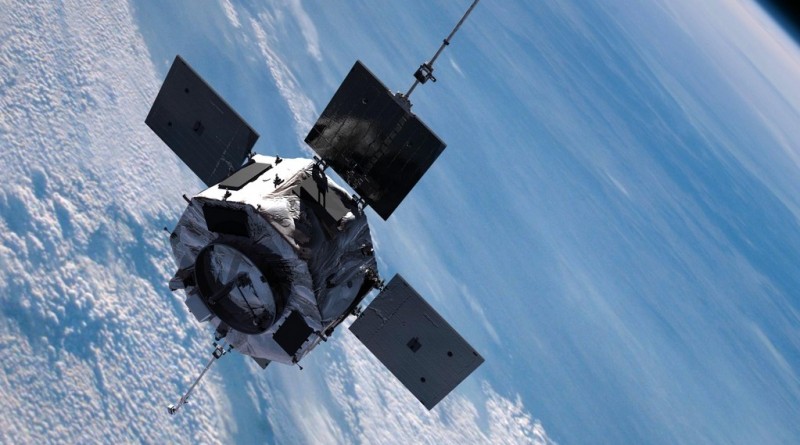
The twin NASA Radiation Belt Storm Probes have completed their 60-day In-Orbit Commissioning Phase and are now ready to begin nominal science operations - with the twins now orbiting Earth with a new name.

NASA has officially re-named the two RBSP Spacecraft the 'Van Allen Probes' to honor the late James Van Allen who discovered Earth's Radiation Belts in 1958. “James Van Allen was a true pioneer in astrophysics,” said John Grunsfeld, associate administrator for NASA’s Science Mission Directorate. “His ground breaking research paved the way for current and future space exploration. These spacecraft now not only honor his iconic name but his mark on science.”

Van Allen was principal investigator for a number of scientific investigations that flew on 24 satellites and planetary mission including Explorer 1, the first American Satellite to orbit the Earth, and the planetary probes, Pioneer 10 and 11. He is credited with the discovery of Earth's radiation belts, a moon of Saturn and Saturn's radiation belts.

"We are excited to be honoring James Van Allen in this way," said David Sibeck, NASA's mission scientist for the Van Allen Probes. "This is an important mission that carries on early magnetospheric work. In the past we have only had one spacecraft at a time looking at the radiation belts. The state-of-the-art instruments we have now are going to be able to comprehensively observe all the types of particles and waves in this part of the magnetosphere."

Picture
Image: NASA/Goddard Space Flight Center
The re-naming of the spacecraft came after a major mission milestone had been completed: the 60-day commissioning phase that the two vehicles completed in late October, officially transitioning to the two-year primary science phase. 

During the commissioning phase, both instruments completed the deployments of the different booms that are part of the instrument suite that the vehicles carry. In addition, instrument doors were opened and the individual science instruments were powered up for extensive testing and characterization. Initially, instruments were checked in their stowed configuration before being deployed and checked again. The four radial and twin axial booms were deployed over a two-week period. As the pair-wise boom deploy sequence unfolded, the spin rate of the spacecraft decreased. The booms were deployed in a click-wise fashion with one boom boom staying within 2 clicks of the opposing one to make sure the center of gravity remained centered. After Radial Boom Deployment was complete, the twin axial booms were deployed to their initial 5-meter deploy state before the fine-tuned deploy phase took place with the booms being deployed in centimeter increments. The final steps of the commissioning process was the opening of the doors to both Helium Oxygen Proton Electron (HOPE) instruments. One of the final procedures of the commissioning phase was the software load into a number of instruments to begin instrument characterization and fine-tuning.

Van Allen Probes - Instruments

Picture
Image: JHU/APL/NASA
Picture
Image: JHU/APL/NASA
All instruments have started regular operations and are performing per their mission requirements with some instruments even exceeding expected performance.

“We are very pleased to have the RBSP spacecraft successfully complete the commissioning period,” said Kim Cooper RBSP Project Manager at the Johns Hopkins University Applied Physics. “Over the past 60 days, the many complex systems on the probes have come to life and started to work together. Progress has been rapid; RBSP’s science instrument teams are already recording some illuminating data, and scientists are taking advantage of their best understanding of the mechanics and properties of the radiation belts to date.”

The preliminary science data that was acquired by the two spacecraft during their first two months in orbit already has scientists excited as data sets returned by the vehicles are providing the most detailed information on the Van Allen Belts ever obtained. Future papers and publications using RBSP data are already being planned. “After only two months in orbit, the Van Allen Probes have made significant contributions to our understanding of the radiation belts,” said APL Director Ralph Semmel. “The science and data from these amazing twin spacecraft will allow for more effective and safe space technologies in the decades to come. APL is proud to have built and to operate this new resource for NASA and our nation, and we are proud to have the mission named for one of APL’s original staff.”

To learn more about the Van Allen Probes, visit our RBSP section with detailed background information about the spacecraft, their instruments and scientific objectives.


RBSP acquires initial Science Data during Commissioning Phase

September 12, 2012

NASA twin Radiation Belt Storm Probes are proceeding with Spacecraft and Instrument Commissioning that is planned to be in progress for the first 60 days of the Mission following its launch on August 30, 2012 aboard an Atlas V 401 Rocket.
"We have never before sent such comprehensive and high-quality instruments to study high radiation regions of space," said Barry Mauk, RBSP project scientist at the Johns Hopkins University's Applied Physics Laboratory (APL). "RBSP was crafted to help us learn more about, and ultimately predict, the response of the radiation belts to solar inputs."

To fully utilize the twin spacecraft for science activities, the vehicles have to go through a lengthy commissioning activity to place them in their final configuration to enter science operations. During the 60-day Commissioning Activity, the spacecraft will perform their various deployments of the different instrument booms and activate the individual instruments.
After successfully deploying their Solar Arrays shortly after launch, the two Spacecraft have completed the deployment of the Magnetometer Booms that are mounted on two opposite Solar Arrays of each spacecraft and extend three meters from the edge of the spacecraft bus. 

Picture
Image: NASA/APL/JHU
The EMFISIS Instrument (Electric and Magnetic Field Instrument Suite and Integrated Science) that consists of a tri-axial fluxgate magnetometer (MAG) and a tri-axial AC magnetic search coil magnetometer (MSC), was activated early in the flight following Magnetometer Boom Deployment. On September 5, the instrument suite was used create a new "chorus" sequence. 
Known as "chorus" are radio waves emitted by energetic particles that are present in Earth's radiation belts and are in the frequency range that is audible to the human ear, so that recorded data can be converted to audio. “People have known about chorus for decades,” said EMFISIS principal investigator Craig Kletzing, of the University of Iowa. “Radio receivers are used to pick it up, and it sounds a lot like birds chirping." 

In addition to EMFISIS, the Relativistic Electron Proton Telescope (REPT) that is part of the Energetic Particle Composition, and Thermal Plasma Suite (ECT) of the RBSP Spacecraft, was activated on September 1, less than two days after launch. First REPT-A on RBSP-A was activated, followed 12 hours later by REPT-B on the other twin. 

Teams were in a hurry to get this particular instrument activated to create as big as an overlap between RBSP REPT readings and measurements by the aging NASA Solar Anomalous and Magnetospheric Particle Explorer (SAMPEX) that was launched back in 1992 and is quickly approaching the end of its lifespan. It is important to scientists to have data taken by RBSP and SAMPEX during the same time frame to better characterize data coming from both spacecraft and to combine data sets to create advanced data products. 

Originally, it was planned to activate the REPT instrument about one month after launch, but the window of opportunity of getting data about Earth's Radiation Belts from two very different places was closing rapidly. SAMPEX orbits Earth in a low orbit while RBSP features a highly elliptical orbit that takes the spacecraft through the inner and outer Van Allen Belts. 

REPT measures electrons with energies of 1.5 to 20 MeV (mega electron volts) and protons from 17 to more than 100 MeV. These ranges overlap with those observed by SAMPEX and REPT Science Lead, Daniel Baker, did not want to give up this chance of working with SAMPEX. REPT  covers the highest energies that can be measured with RBSP.
“I went on a campaign to get REPT turned on much earlier to assure that as much overlap of data as possible could occur,” Baker said. “Everybody involved with RBSP, at NASA and APL and the other institutions saw the wisdom of this, and we got the turn-on time moved up.”

Just three short days after launch, both REPT instruments aboard the two spacecraft were actively gathering data. “We have highly understandable, full science data right out of the box,” ECT principal investigator Harlan Spence said. “The REPT units are performing identically in space as they did on the ground, exceeding our highest expectations and delivering outstanding scientific measurements of the radiation belts. We are on the exciting threshold of discovery.”
The largest Solar proton Event observed over the past two months occurred on the same day that REPT-A was activated - giving the teams just what they are need to study the response of Earth's Radiation Belts to solar events. 

Picture
Credit: LASP/LANL/UNH
This is the first science data the REPT-A instrument has returned showing the electron flux in the two upper and the proton flux in the two lower graphics. The data clearly shows the higher electron abundance in the outer belt and the higher proton population of the inner Van Allen Belt. The outer belts passage is much longer than that of the inner belt since the two spacecraft spend much more time around apogee - the highest point of their orbit - than they do around perigee, so they spend more time in the outer belt. The area between the two belts can also be distinguished when looking at the data. “These are textbook measurements of the outer belt, the slot between the belts, and the inner belt,” said Daniel Baker.

The other ECT instruments are also undergoing their respective commissioning activities. The Magnetic Electron Ion Spectrometer, or MagEIS Instruments, were powered up on September 6 while the Helium Oxygen Proton Electron Instrument (HOPE) will be activated in mid- to late October being the final RBSP science instrument that will be activated.

"The excitement of seeing the spacecraft in orbit and beginning to perform science measurements is like no other thrill," said Richard Fitzgerald, RBSP project manager at APL. "The entire RBSP team, from across every organization, worked together to produce an amazing pair of spacecraft."

When the RBSP Commissioning Period is complete, the two spacecraft will enter nominal science operations to map Earth's Van Allen Belts for a two-year primary mission. 
"Scientists will learn in unprecedented detail how the radiation belts are populated with charged particles, what causes them to change and how these processes affect the upper reaches of the atmosphere around Earth," said John Grunsfeld, associate administrator for NASA's Science Mission Directorate at Headquarters in Washington. "The information collected from these probes will benefit the public by allowing us to better protect our satellites and understand how space weather affects communications and technology on Earth."


Twin RBSP Spacecraft delivered to Orbit by ULA Atlas V Rocket

August 30, 2012

Picture
Photo: United Launch Alliance
Photo Gallery: RBSP Launch
A United Launch Alliance Atlas V 401 Launch Vehicle lifted off from Florida's Space Coast on Thursday, August 30, 2012 - lighting up the night sky as the rocket embarked on a mission to deliver NASA's two Radiation Belt Storm Probes Spacecraft to Orbit. Launch from Space Launch Complex 41 at Cape Canaveral Air Force Station occurred at 8:05 UTC after an uneventful and clean Launch Countdown. Powered Flight of the Atlas Vehicle and the Centaur Upper Stage was nominal and the twin spacecraft were successfully delivered to their highly elliptical science orbits. This launch sets the stage for a busy RBSP Science Mission to examine Earth's Radiation Belts, or Van Allen Belts, in unprecedented detail - shedding light on the unknown processes that occur in the Belts and control near-Earth Space Weather.

This marked the third Launch Attempt for this mission. Last week's launch attempts were scrubbed due to technical issues and weather rule violations. The Atlas V was rolled back to the Vehicle Integration Facility after Saturday's Scrub to be protected from inclement weather that came to the area when Hurricane Isaac passed west of Florida. On Tuesday, the vehicle was rolled to the launch pad again and teams performed preparations in order to start countdown operations on time.
The Launch Team was on console at L-7:30, and 15 minutes later, the Atlas V Launch Vehicle was powered up to begin final testing and countdown activities. In the early portion of the countdown, teams cleared the Vehicle Integration Facility, performed Launch Pad Close-Outs and started to set up Road Blocks in preparation for Blast Danger Area Evacuation. After completing vehicle and pad close-outs, engineers departed the Launch Complex and cleared the Blast Danger Area to set the stage for the complex fueling process. Also, the Launch Hazard Area became active and Air Force Controllers started to monitor the Eastern Range. 

Checkouts and reconfigurations of the Atlas V 401 launcher continued as planned. In its 401 configuration, which is the most basic version of the Atlas V, the launcher is equipped with no Solid Rocket Boosters, has a single-engine Centaur Upper Stage and uses a four-meter payload fairing. With its two stages, Atlas V 401 stands more than 58 meters tall and has a main diameter of 3.81 meters. Visit our Launch Vehicle Overview for all specifications and details about Atlas V 401.
Fueling got underway just after countdown clocks started ticking again coming out of a 30-minute built-in hold at the T-2-Hour mark. This hold was the first of two built-in countdown holds. Thursday's Atlas V Countdown featured an extended hold of 25 minutes at T-4 minutes to give teams additional time to make final launch preparations and deal with any off-nominal situations. When clocks started ticking again, the complex cryogenic propellant loading operation started. The procedure began with Transfer Lines Chilldown and Atlas/Centaur Tank Chilldown before propellants started actually flowing inside the Vehicle’s tanks.

Liquid Oxygen Loading of the Centaur Upper Stage began at L-2:12 and was followed by Common Core Booster LOX Tanking at L-1 Hour and 53 Minutes. To fill the tanks with Oxidizer, the vehicle went through slow fill mode before transitioning to fast-fill and eventually reaching the topping phase when tanks crossed the 95% mark. Atlas Booster Topping began while the Upper Stage had reached its LOX Flight Level well before that. Centaur Liquid Hydrogen Loading started at L-87 Minutes and also went through the nominal steps. Only cryogenics had to be tanked today, since the Rocket Propellant 1 Fuel, which is rocket-grade Kerosene, was loaded last Tuesday as part of pre-countdown operations. In total, the launcher was holding 304,919 Kilograms of propellants when fueling was complete. The hydraulic system of the vehicle was pressurized and checked and the RD-180 first stage engine as well as the RL-10 second stage engine were put through a steering profile. At L-40 minutes, the Fueling Process concluded and a final round of vehicle testing started. These tests included Flight Termination System checks to make sure the system was ready to destroy the launcher in the unlikely event of a major malfunction. At T-4 Minutes, countdown clocks stopped once again for the final built-in hold which was 25 minutes in duration, 15 minutes longer than usual to give the Launch Team additional time to deal with any issues. During the hold, teams performed final checkouts and verifications before the final set of polls came up. Also, the twin RBSP Spacecraft were switched to internal power at L-9 Minutes. The launch team was polled for a Go/No Go to resume the Countdown and Launch. All Stations Reported GO.
Teams completed the final pre-launch Polls and decided to press into the Automated Countdown Sequence as all stations reported GO for launch including the Air Force Eastern Range. The Countdown resumed at 8:01 UTC and final vehicle reconfigurations were made in the 4 minutes leading up to Blastoff. Pressurization of Atlas and Centaur Tanks to Flight Level was completed as expected. Also, the vehicle switched to internal power and the Launch Control System was enabled. (Countdown Timeline)

Picture
Photo: NASA Kennedy
Picture
Photo: United Launch Alliance
The single, 2-chamber RD-180 Main Engine of the Atlas Rocket soared to life and was allowed to reach full thrust while being closely monitored by flight computers. After nominal engine performance was verified, the Launcher was allowed to blast off. 
At 8:05 UTC, the 335,000-Kilogram Atlas V Rocket lifted off - lighting up the night skies of the Florida Space Coast, making a gentle initial ascent with a Thrust-To-Weight-Ratio of just 1.166 without any Solid Rocket Boosters providing extra thrust. Seventeen seconds after launch, the Atlas V launch vehicle performed its initial Pitch & Roll Maneuver to align itself with the precise 103.98-degree launch azimuth to leave the Space Coast turning South-East.
After about 80 seconds, the vehicle passed Mach 1 and encountered Maximum Dynamic Pressure 11 seconds later.  The vehicle continued powered ascent with its RD-180 Engine that kept burning until T+4 Minutes, 3 Seconds providing 3,827 Kilonewtons of thrust. Stage Separation and Centaur Ignition were normal with RL-10 ignition at T+4:19 on a 9-minute, 17-second burn. The protective payload fairing of the vehicle was jettisoned 4 minutes and 27 seconds into the flight exposing the two spacecraft as the launcher had left the dense portion of Earth's atmosphere taking thermal loads within limits to separate the fairing as early as possible to increase launch vehicle performance. Centaur shut down as planned and the vehicle had achieved its Low Earth Parking Orbit of 176 by 586 Kilometers with an inclination of 25.5 degrees. (Ascent Profile)
At that point, a nearly 56-minute Coast Phase during which Centaur initiated a slow Barbecue Roll to evenly distribute sun-exposure and maintain thermal limits. 69 minutes after blasting off, the Upper Stage ignited on the second and final main engine burn of the mission. The Centaur Upper Stage and its single RL-10A-4-2 providing 99.2 Kilonewtons of thrust conducted a 4-minute and 40-second burn to raise the stack's apogee altitude to achieve the proper orbit for spacecraft separation: 605 x 30,410km for RBSP-A & 625 x 30,540km for RBSP-B.
Following its second shutdown, the Centaur performed a re-orientation maneuver in preparation for RBSP Separation. In addition, the vehicle completed a spin-up maneuver as RBSP are spin-stabilized vehicles. RBSP-A was sent on its way at T+1:18:52 as springs pushed it away from RBSP-B which remained attached to the Centaur Stage. With the first twin on the way, the Upper Stage performed a de-spin, followed by a small orbit modification, a 140-second delta-V burn with the Centaur settling thrusters, to increase the Perigee and Apogee altitude because RBSP-A and B operate in slightly different orbits to address the mission's science objectives. When reaching the proper altitude, orientation and spin-rate once again, the second payload was separated at 9:36 UTC and delivered to its desired orbit. Centaur made Contamination and Collision Avoidance Maneuvers to successfully conclude its mission. This flight marked the 614th Atlas Launch since the beginning of the program 1957, the 32nd Atlas V launch and the 13 Atlas V to fly in the 401 configuration. It was the fourth Atlas launch of the year.  

Picture
Photo: NASA TV
Picture
Photo: NASA TV
Picture
Photo: NASA TV
This successful launch of NASA's two Radiation Belt Storm Probes marks the beginning of a two-year primary science mission examining the Van Allen Belts in unprecedented detail. Taking the first major step of their respective journeys, both spacecraft deployed their solar arrays and started charging their batteries. With RBSP-A and B safely in orbit and in initial configuration, they are set for a 60-day on-orbit commissioning phase. During this period, both spacecraft will undergo deployments of their various booms that are part of the five science instruments of the spacecraft that will measure radiation belt particles as well as electric and magnetic field properties. The instruments will also be activated and checkout out before the long-awaited primary mission can begin. 
"We've been waiting for this mission for decades. The Van Allen belts were discovered in 1958 and since that time, we know something about the radiation belts but not enough. This mission is designed to really understand the whole solar interaction with the radiation belts and understand why they are excited and sometimes, why they're not," said RBSP Project Scientist Richard Fitzgerald. The RBSP Mission is managed by the Applied Physics Laboratory at the Johns Hopkins University. 
Picture
Credit: NASA/APL/JHU
Picture
Credit: NASA/APL/JHU
With both probes now in their highly-elliptical orbits with a 9-hour period, they are on a course flying through Earth's two Radiation Belts over and over again measuring the processes present in the belts that hold trapped particles, respond to solar events and thus control the near-Earth Space Weather. The unique aspect of RBSP is that the two spacecraft are in slightly different orbits that lap each other every 75-days causing the vehicles to be flying at different distances to one another. Sometimes, the probes will be separated by more than 30,000 Kilometers before closing in again and coming as close as 130 Kilometers - allowing the mission to examine radiation belt phenomena on a global scale and also look at localized properties of the belts. The Van Allen Belts are dynamic tori of energetic charged particles around Earth (donut-shaped regions) which are held in place by Earth's magnetic field. Particles present in the Radiation belts are believed to originate in solar winds and cosmic rays. These particles are trapped in these regions due to the Earth's magnetic field with positive protons tending to be trapped in the inner of the two radiation belts that extends from 1.2 to 3 Earth Radii and comes as close as 100 Kilometers at times of high activity. In the larger, outer belt, extending from about 13,000 to 60,000 Kilometers above Earth's surface, high-energy electrons and ions are present. Powerful electric currents are generated as the particles interact with the magnetic field which has the potential to accelerate them to near light speed. Following Earth field lines, these particles can crash into the Earth's atmosphere near the poles or bounce back out into space, creating the Aurora Borealis in the north and the Aurora Australis in the South. "The Radiation Belt Storm Probes will give us a better understanding of how the radiation belts actually work, and allow us to do a better job of predicting and protecting against the radiation that's up there in the future," said Mission Systems Engineer Jim Stratton, also of APL. 
Understanding how particles are trapped in the belts and what processes are present inside the two belts as they react to solar activity and create the near-Earth space weather and radiation environment is the main focus of the RBSP Mission. 

"The difficult thing for us to work out is why they're changing, why they change at different times to seemingly similar drivers. We know that variations in the sun create strong geomagnetic storms here at Earth. But what we don't understand is how we really, truly respond to them," said Nicola Fox, RBSP Deputy Project Scientist. The physical processes involved in the enhancement and decay of the belts and in the formation of new ones are generally unknown and will be examined by the RBSP mission to better understand space weather phenomena. Space Weather has become an important issue for space and Earth applications since the effect Solar Wind and particularly large Coronal Mass Ejections have on Earth are adverse and affect a variety of technological applications. Monitoring Solar Activity and CMEs, and forecasting these events by using different spacecraft has become a common practice, but forecasting the response of Geospace (near-Earth Space including the Van Allen Belts) is nearly impossible with the current insight in the physical processes that are responsible for these responses. Understanding these processes is an important step to producing forecasting models for Geospace Responses to Space Weather Related Drivers. "That is important because it will allow us to design better spacecraft; we'll be able to protect them better and we also won't do costly overdesign," Fox explained. "It will help us protect astronauts that are out in Earth orbit, and it will benefit the science community by giving us a lot more information about fundamental particle physics." 

To learn more about the RBSP Spacecraft & Instruments, the science involved in the mission and the BARREL mission that will study the particles that are lost from the belts in parallel with RBSP, please visit our RBSP Section.   
 

Picture
Image: JHU/APL
Picture
Image: JHU/APL

Atlas V & RBSP back at the Pad for next Launch Attempt

August 28, 2012

The Atlas V Launch Vehicle carrying the two Radiation Belts Storm Probes has been rolled to the launch pad at Space Launch Complex 41 of Cape Canaveral Air Force Station once again, following last week's Launch Scrub and Rollack.

Making the first 500 meters of the trip to Orbit, Atlas V and the two Spacecraft hidden under the Payload Fairing were rolled from the Vehicle Integration Facility to the nearby launch pad. The move started at around 18:00 GMT on Tuesday and the large Mobile Launch Platform was transported using two trackmobiles. The trip from the VIF to the launch site took about 40 minutes and was completed at 18:40 GMT with the Platform being centered on the Pad. Once arriving at the Launch Pad, a busy day of launch preparations got underway as the vehicle was secured at its launch site. Electrical connections will be made and propellant and communication lines will be connected. Also, preparations to load the Common Core Booster with storable Rocket Propellant 1 will be made. Later, the trackmobiles will be removed and pad close-outs will start to set the stage for countdown operations on Thursday. The Atlas V will spend a quiet day at the Launch Complex before the launch team reports to console just before 9pm local time on Wednesday. Countdown operations will begin 7.5 hours before launch with Launch Vehicle Activation. Subsequently, initial checks of the Atlas Launcher will be made and the Launch Area will be cleared off all personnel. At T-2 Hours, the cryogenic tanking process will start as the first stage is filled with Liquid Oxygen and the second stage is loaded with Liquid Hydrogen and Liquid Oxygen – going through a complex tanking procedure involving slow and fast propellant fill followed by topping and replenish. While the countdown continues, final systems checks will be performed by the Launch Team. Final Flight Software will be loaded into the flight computers aboard the Atlas and countdown clocks will stop at the T-4-Minute Mark to give teams a chance to address any open issues and conduct the final GO/No GO Polls setting the stage for Launch. As clocks start ticking down from T-4 Minutes, final vehicle configurations will be made as part of the Automated Sequence to place the vehicle in its launch configuration. 

Picture
Photo: NASA Kennedy
Launch is currently targeted for the opening of Thursday's 20-minute launch window that opens at 8:05 GMT. Meteorologists still have some concerns for this launch opportunity. Hurricane Isaac will be dissipating inland as launch gets closer, but a trough will move in north of the Cape causing concerns for thick clouds and isolated showers in the vicinity. Currently, meteorologists are predicting a 40% probability of weather rule violations during the launch window on Thursday. Friday's launch opportunity looks better with a 30% chance of unfavorable weather. Primary concerns for both days are Cumulus Cloud and Thick Cloud rule violations. 
NASA TV will be providing live coverage starting at 5:30 GMT on August 30. Spaceflight101 will provide live countdown updates via the @S101_Live Twitter feed. 


Atlas V with RBSP grounded due to unfavorable Weather

August 25, 2012
UPDATED

Picture
Photo: NASA Kennedy
The Launch Attempt of an Atlas V 401 Rocket with NASA's Radiation Belt Storm Probes was scrubbed on Saturday due to unfavorable weather conditions throughout the Launch Window. Countdown operations for this second launch attempt got underway 7.5 hours prior to launch after reviews and reconfigurations associated with the C-Band Beacon System and ground assets were underway to solve the problem of 'out-of-family' behavior of that system which caused Friday's Scrub. Reviews were performed to clear the issue and provide the green light for another launch attempt. The Launch Team started countdown procedures at L-7:30 with Launch Vehicle Power-Up 10 minutes later. Countdown operations were nominal as the launcher was loaded with cryogenic propellants and final checkouts commenced. No problems were in work and all equipment was ready to support the launch.
Meteorologists had predicted a 60% chance of good weather, but Launch Commit Criteria were violated before the opening of the day's 20-minute launch window at 8:07 UTC and Range Weather went RED. Conditions did not improve and Range Weather caused hold extensions of 5 minutes to allow conditions to become cooperative until the last moment of the launch window. After it became clear that weather would remain RED, the launch attempt was scrubbed for the day. Teams immediately started recycle operations and de-tanking of the Atlas V launcher. 

Initially, the Launch Team was instructed to perform operations for a 24-hour recycle, but a meeting later in the day concluded with a decision to roll the launcher back to the Vehicle Integration Facility to avoid the threat of significant weather related to Isaac which is a tropical storm and will likely develop into a hurricane. Isaac is expected to bring high winds and rain to Cape Canaveral as its skirts by Florida early next week. Rollback will be performed on Sunday after the vehicle has warmed up and residual cryogenics have boiled off.
The next launch attempt of the Atlas V with RBSP is now planned to occur next Thursday, August 30, 2012 during a 20-minute launch window opening at 8:05 UTC. This launch date has to be confirmed by the range first, before launch can take place.

Countdown Timeline, Ascent Information, Launch Vehicle Information: RBSP Launch Info Site 

Tracking System Issue causes Atlas V / RBSP Launch Scrub

August 24, 2012

The Launch Attempt of a United Launch Alliance Atlas V Rocket with NASA's Radiation Belt Storm Probes Spacecraft under its Payload Fairing was scrubbed during Friday's Countdown due to an issue with the Eastern Range - likely related to the Atlas V C-Band Beacon System. After the scrub, teams have called for a 24-hour recycle for the next launch attempt on Saturday with the 20-minute launch window opening at 8:07 GMT.
The overnight Countdown, local time, began 7.5 hours before Launch when the United Launch Alliance Launch Team reported to console and countdown procedures commenced with the activation of the Atlas V launch vehicle 10 minutes later. In its 401 configuration, Atlas V features no Solid Rocket Boosters, a single-engine Centaur Upper Stage and a 4-meter Payload Fairing. For all specifications of the Atlas V 401 Rocket, refer to our comprehensive overview. As the countdown went through its initial stages, extensive vehicle tests began to make sure the rocket was in proper condition for flight. 

Picture
Photo: United Launch Alliance
Also, road blocks were set up in preparation for Launch Complex Evacuation. After completing vehicle and pad close-outs, engineers departed the Launch Complex and cleared the Blast Danger Area to set the stage for the complex fueling process. Also, the Launch Hazard Area became active and was monitored by Air Force Range Controllers at the Morell Operations Center, providing a clear range for the Rocket on its way to depart the Space Coast. Fueling got underway just after countdown clocks started ticking again coming out of a 30-minute built-in hold at the T-2-Hour mark. This hold was the first of two built-in countdown holds. Friday's Atlas V Countdown featured an extended hold of 25 minutes at T-4 minutes to give teams additional time to make final launch preparations and deal with any off-nominal situations. 
The complex propellant loading process started with Transfer Lines Chilldown and Atlas/Centaur Tank Chilldown before propellants started actually flowing inside the Vehicle’s tanks. Liquid Oxygen Loading of the Centaur Upper Stage began at T-1:43 and was followed by Common Core Booster LOX Tanking at T-1 Hour and 30 Minutes. During CCB LOX Loading, an issue with the indicators of the Main LOX Fill&Drain Valve was identified that was discussed by the Anomaly Team. A work-around was put in place, delaying Atlas Fueling, but not affecting countdown operations. To fill the tanks with Oxidizer, the vehicle went through slow fill mode before transitioning to fast-fill and eventually reaching the topping phase when tanks crossed the 95% mark. Atlas Booster Topping began while the Upper Stage had reached its LOX Flight Level well before that.  Centaur Hydrogen Loading started at L-97 Minutes and also went through the nominal steps. The first stage of the Vehicle was filled with Rocket Propellant 1 which is highly refined Kerosene, during nominal Atlas launch preparations this week ahead of the countdown. Before and during fueling, the Atlas V underwent extensive checkouts. The electrical system was thoroughly checked and communication checks were performed by the launch team that also activated and tested the Rocket’s Flight Termination System.  
The hydraulic system of the vehicle was pressurized and checked and the RD-180 first stage engine as well as the RL-10 second stage engine were put through a steering profile. At L-50 minutes, the Fueling Process concluded and a final round of vehicle testing started. These tests included Flight Termination System checks to make sure the system was ready to destroy the launcher in the unlikely event of a major malfunction. At T-4 Minutes, countdown clocks stopped once again for the final built-in hold which was 25 minutes in duration, 15 minutes longer than usual to give the Launch Team additional time to deal with any issues. During the hold, the twin RBSP Spacecraft were switched to internal power to place them in their launch configuration. In addition, the Launch Team received a weather briefing. While the countdown was in progress, Meteorologists improved the chances of cooperative weather from 70% to 90% because clouds from afternoon thunderstorms did not linger above the area as it was expected earlier. Weather conditions were GREEN and Upper Level Winds were within limits as well, but during the final Go/No Go Poll to release the hold, the Eastern Range reported 'No Go' due to an issue with Atlas-V C-Band Beacon System or the Range Tracking Assets.

"We had a nominal countdown, but towards the end of the countdown we got a reading that the C-Band tracking beacon was drifting from the range systems that were picking that up. With our limited window ... we did not have enough time to evaluate the cause," NASA Launch Manager Tim Dunn said. Teams will have to look at the data to determine whether the problem is related to the Launch Vehicle's C-Band Tracking Beacon or the Range Ground Support Equipment. Having the C-Band tracking system up and running is a Range Requirement for Atlas V launches. 
After the scrub was called, teams immediately started recycle operations to de-tank the vehicle and enable engineers to re-enter the launch pad to perform required operations for the next launch attempt. The launch has been re-planned for Saturday, August 25 during a 20-minute launch window opening at 8:07 UTC. This decision was made after an extensive review of the C-Band System was performed and the problem was solved successfully.

Picture
Photo: NASA Kennedy

Twin RBSP Spacecraft & Atlas V Rocket rolled out to Launch Pad

August 22, 2012

The Atlas V Launch Vehicle carrying the twin Radiation Belt Storm Probes Spacecraft has been rolled out to the Launch Pad at Space Launch Complex 41 of Cape Canaveral Air Force Station, Florida in preparation for Liftoff on Friday, August 24. This Rollout sets the stage for Countdown Operations starting late on Thursday, local time, with a night-launch taking place on Friday.

To make the first 550-meter trip to their desired Orbit, the Launcher and the two Spacecraft hidden under the Atlas V Payload Fairing were rolled from the Vehicle Integration Facility to the nearby launch pad. The move started at around 12:00 GMT on Wednesday and the large Mobile Launch Platform was transported using two trackmobiles. The trip from the VIF to the launch site took about 30 minutes and was completed at 12:40 GMT with the Platform being centered on the Pad. Once arriving at the Launch Pad, a busy day of launch preparations got underway as the vehicle was secured at its launch site. Electrical connections will be made and propellant and communication lines will be connected. Later, the trackmobiles will be removed and pad close-outs will start to set the stage for countdown operations on Thursday. The Atlas V will spend a quiet day at the Launch Complex before the launch team reports to console just before 9pm local time on Thursday. Countdown operations will begin 7 hours before launch with Launch Vehicle Activation. Subsequently, initial checks of the Atlas Launcher will be made and the Launch Area will be cleared off all personnel. At T-2 Hours, the cryogenic tanking process will start as the first stage is filled with Liquid Oxygen and the second stage is loaded with Liquid Hydrogen and Liquid Oxygen – going through a complex tanking procedure involving slow and fast propellant fill followed by topping and replenish. While the countdown continues, final systems checks will be performed by the Launch Team. Final Flight Software will be loaded into the flight computers aboard the Atlas and countdown clocks will stop at the T-4-Minute Mark to give teams a chance to address any open issues and conduct the final GO/No GO Polls setting the stage for Launch. As clocks start ticking down from T-4 Minutes, final vehicle configurations will be made as part of the Automated Sequence to place the vehicle in its launch configuration. 

Picture
Atlas V 401 Rollout *File Image* - Photo: United Launch Alliance
Liftoff is planned to occur at the opening Friday's 20-minute Launch Window at 8:07 GMT. A complete Atlas V Countdown Timeline is available here. Refer to the Launch Info Site and the Ascent Info Section for more information on the ascent profile and launch vehicle.
To learn more about the RBSP Mission, the science involved and the BARREL Mission that will be underway in parallel, visit our detailed RBSP Section.


Photo Gallery: RBSP Rollout

Atlas V with RBSP declared ready for Launch after clean LRR

August 21, 2012

The United Launch Alliance Atlas V 401 Rocket has passed its Launch Readiness Review that was conducted on Tuesday, August 21, clearing the way for Launch of NASA's RBSP Mission on Friday, August 24 after necessary inspections regarding the Atlas V engines were completed.

Earlier, United Launch Alliance announced a 24-hour launch delay from the original Thursday launch target to perform additional confidence checks on the Atlas V Engine that became necessary after an anomalous condition was found on a different engine on a vehicle currently in production at the Decatur Factory, Alabama. The checks were focused on the hydraulic system actuators on the Atlas V first-stage booster's RD-180 engine. These actuators are needed to gimbal the two-chamber engine for vehicle control during powered flight. The confidence checks took about 4 hours of testing followed by analysis. An engineering review board convened to discuss the test results and give recommendations and statuses as part of the Launch Readiness Review. No problems with the systems were identified and teams were able to give the green light for launch operations. After a clean LRR, teams are now pressing into nominal pre-countdown operations to prepare the vehicle and the Vehicle Integration Facility for the Rollout of the launcher. The Launcher will be moved to Space Launch Complex 41 at Cape Canaveral Air Force Station on Wednesday for final launch preparations and the Launch Countdown. The Rollout is planned to begin at 10am local time – 14:00 GMT. Two trackmobiles will be used to move the Mobile Launcher and the Atlas V with its Payload to the Launch Pad. Rollout will take approximately 30 minutes. When arriving at the Pad, the structure will be secured and electrical connections will be made. 

Picture
Image: United Launch Alliance
Also, propellant and communication lines will be connected.  Later, the trackmobiles will be removed and pad close-outs will start to set the stage for countdown operations. The launch team will get ready for their long Launch-Day Shift by adjusting their sleep cycles to support the overnight operation. They will report to console about seven hours before launch to begin countdown operations late on Thursday, local time, for a night launch on Friday. The 20-minute launch window opens at 8:07 GMT. Meteorologists have issued a 60% chance of favorable weather during the launch window with primary concerns being violations of the Thick Cloud Rule. Afternoon Thunderstorms could leave lingering clouds in the area that might be persistent through the night and into the launch window. Weather odds remain at 60% for the Saturday Launch Window - with Cumulus Cloud Rule Violations being a concern.

Atlas V Launch with RBSP delayed for additional Vehicle Checks

August 20, 2012

The Launch of an United Launch Alliance Atlas V Rocket with the twin Radiation Belt Storm Probe Spacecraft has been delayed by 24 hours and is now set for Friday, August 24 at 8:07 GMT, the opening of the 20-minute launch window.
This postponement will give engineers time to perform additional checks of the Atlas V Engine because an anomalous condition was found on a different engine on another Atlas at the Decatur factory. The delay will "allow additional time for engineers to complete their assessments and verify that a similar condition does not exist on the RBSP launch vehicle engine," United Launch Alliance said in a statement. Preliminary weather forecast models show a 60 % chance of favorable weather during Friday's window.

Coming up later on Monday starting at 17:00 UTC, NASA TV will air the pre-launch news conference and the mission science briefing for RBSP.


Atlas V & RBSP complete clean Flight Readiness Review

August 16, 2012

NASA and United Launch Alliance have completed the Atlas V/Radiation Belt Storm Probes Flight Readiness Review and the GO to work towards the August 23 launch date was given.
Mission Managers met on Thursday, August 16, to review all systems associated with the upcoming launch, including the Atlas V Rocket, the twin spacecraft and ground support systems. Also, plans of upcoming activities were discussed and approved after no problems had been found during spacecraft stand-alone and integrated testing. Open items were discussed as well and procedures were put in place to close-out all of these minor items. Without any constraints to launch on August 23, teams are now working towards a firm launch date.
On Friday, August 17, a Launch Countdown Dress Rehearsal will be conducted by the launch team for systems checks and to give teams a chance to prepare procedures and practice communications needed on launch day. Also on Friday, spacecraft close-outs will get underway. On August 20, the Launch Readiness Review is planned to confirm that all systems are ready for Countdown Operations. 

Picture
Photo: NASA Kennedy
One day later, the Atlas V launcher will be rolled to the Launch Pad at Space Launch Complex 41 for final pre-countdown checkouts and vehicle close-outs and preparations. Liftoff remains planned for August 23 during a  20-minute launch window opening at 8:08 GMT. 

RBSP Twins installed on Atlas V Launch Vehicle

August 12, 2012

Picture
Photo: NASA Kennedy
Photo Gallery: Payload roll to SLC-41
Photo Gallery: Payload Installation on Atlas V
The twin RBSP Spacecraft have been placed atop the Atlas V launch Vehicle waiting at Space Launch Complex 41 as preparations for launch continue on schedule.

After being placed in their flight configuration and undergoing final inspections, the two spacecraft were encapsulated in the 4-meter Atlas V Payload Fairing on Monday, August 6. On Wednesday, the stack was positioned on top of the transporter that moved the payloads to SLC-41 at Cape Canaveral Air Force Station in the overnight hours on Thursday, local time. As soon as the vehicle arrived at the Integration Facility, the fairing and payloads were hoisted and installed on the launcher. Once electrical and data connections were in place, the lengthy integration process was complete and the stack was ready to begin integrated testing that will be completed leading up to launch. These tests include countdown and flight simulations to test the vehicle and all of its systems and give the launch team a chance to rehearse the procedures needed on launch day.

The Launch of NASA's RBSP mission remains targeted for August 23 during a 20-minute launch window opening at 8:08 GMT. Currently, all preparations are on track.


Twin RBSP Spacecraft in Launch Configuration and inside Fairing

August 7, 2012

Preparations for the Launch of the twin Radiation Belt Storm Probes have been continuing at  the Space Coast of Florida where the Payloads have been undergoing final processing inside the Astrotech Facility not far from the Cape Canaveral Launch Site.

Since our first processing update was published, more major Final Processing Milestones have been checked off the list and the RBSP Mission is several steps closer to Launch - currently planned for August 23, 2012.
At Astrotech, the RBSP Payloads were transferred to the Hazardous Processing Facility on July 20 (RBSP-A) and July 23 (RBSP-B). Inside that facility, the two vehicles were loaded with Hydrazine Propellant. The spacecraft got a relatively small propellant load of only 28.1 Kilograms each. In Orbit, this Propellant will be used for regular Attitude Corrections to keep the vehicle's Solar Arrays pointed towards the Sun for power generation. Fueling was completed in late July and on July 27, the twin spacecraft were stacked to place them in their final flight configuration. Afterwards, a final inspection was performed and the stack was placed on the Payload Adapter that is needed to install them on the Centaur Upper Stage of the Atlas V Launch Vehicle. On Monday, August 6, the stack was encapsulated in the protective Payload Fairing. The fairing protects the spacecraft while waiting for launch atop the Atlas V and during atmospheric flight when thermal and aerodynamic loads could damage the spacecraft.
At Space Launch Complex 41 of Cape Canaveral Air Force Station, the integration of the Atlas V Launcher was completed in mid-July and testing was completed to make sure all components were working as expected. Now, the spacecraft are awaiting their Rollout to the launch complex to be installed on top of the rocket. This rollout is planned for the overnight hours on Thursday, local time. Once at the complex, the Upper Stack will be hoisted and installed on the Centaur. Electrical and data connections will be put in place before integrated testing is kicked off. 


Photo Gallery: Spacecraft Attachment
Photo Gallery: Installation on Payload Adapter
Picture
Photo: NASA Kennedy

Twin RBSP Spacecraft enter final processng at the Space Coast

July 21, 2012

Final Launch Preparations for NASA's Radiation Belt Storm Probes Mission have started early in 2012 when the two Spacecraft arrived at the Space Coast for final pre-launch processing.

Spacecraft integration was completed in 2011 at the Johns Hopkins University, Maryland. There, the spacecraft were assembled and their instruments were integrated into the spacecraft buses before the Probes began extensive testing. In September 2011, RBSP A completed a spin balance and mass properties test to determine the vehicle's balance and the center of gravity of the two spacecraft which is important for ascent and orbital operations concerned with maneuvers and stability. Only Spacecraft A underwent spin testing since the other vehicle is identical. During the test, the satellite was spun from 30 RPM up to 85 RPM, in increments, in both clockwise and counterclockwise directions to gather a full data set and determine how much ballast had to be loaded to precisely balance the spacecraft.

Picture
Photo: JHU/APL
RBSP during Integration
In December, the vehicles entered environmental testing starting with acoustic evaluations, thermal testing and vacuum testing. To ensure the vehicles were ready to withstand the ascent environment, they were subjected to acoustic loads similar to those occurring at Maximum Dynamic Pressure. Also, a vibrations test was completed to simulate the intense physical effects of launch, and make sure the probes’ systems and electronics are secure and will not be harmed during their ride atop the Atlas V Rocket. 
Picture
Photo: JHU/APL
Picture
Photo: JHU/APL
In early 2012, the twin spacecraft underwent an electromagnetic compatibility and interference test to make sure all on-board systems work without interfering with each other. In February, the longest element of testing began. For vacuum testing, the RBSP Spacecraft were sealed in a vacuum chamber that simulated the space environment putting the spacecraft through heating and cooling cycles as they occur in orbit when passing from night to day. 
On March 13, as part of vacuum testing, the Mission Team and the spacecraft jumped forward in time to February 13, 2013 to simulate 10 days of the RBSP Mission. For that, the Mission Operations Center at JHU and the Science Operations Centers for the individual instruments underwent a full rehearsal of mission operations. These operations included daily events such as simulated communication passes to downlink telemetry and data from the spacecraft which are then relayed by MOC to the individual Science Operations Center. There, data processing was performed and commands for the spacecraft were generated which were then sent to MOC for simulated uplink to the vehicles. This was done to check the communication techniques and operations that are planned for the mission since a high degree of choreography is required to operate the two spacecraft and their five instruments. Also, during the 10-day simulation, events that do not occur on a daily basis were rehearsed. These included a nominal re-orientation maneuver which will happen periodically throughout the mission to keep the spacecraft's solar arrays pointed at the sun. In addition, teams went through the procedures of a collision avoidance [COLA] maneuver. 
This period of testing enabled engineers to learn how their spacecraft behave before starting the actual mission to hit the ground running after orbital insertion. The test was completed successfully and all 400 requirements were accomplished. With vacuum testing finishing in early April, the two spacecraft underwent a final set of inspections at the Applied Physics Laboratory at JHU before being packed for the transfer to the Launch Site. 
On Monday, April 30, 2012, the spacecraft departed the Johns Hopkins University Applied Physics Laboratory (APL) for Andrews Air Force Base from where they were flown to the Kennedy Space Center's Shuttle Landing Facility aboard a United States Air Force C-17 cargo plane. The containers with the spacecraft were transported to the Astrotech Processing Facility in Titusville, Florida where the RBSP vehicles were unpacked and placed on test stands for final pre-launch operations. The end of May marked the final installation and integration of RBSP’s instruments and the twin spacecraft underwent swing testing and completed mission simulations. Also, the vehicle's solar arrays were processed and installed on the spacecraft along with flight blankets. Late in June, another round of spin testing was completed to determine the center of gravity of the satellites. The vehicles completed solar array deployment testing on July 5. More processing events including hazardous operations are planned for July before the twin spacecraft will be stacked for flight and final close outs will be performed before the stack is encapsulated in the protective Payload Fairing and transported to the Launch Site for Integrated Launch Preparations. 
Picture
Photo: NASA Kennedy
Picture
Photo: NASA Kennedy
Picture
Photo: NASA Kennedy
At Space Launch Complex 41 at Cape Canaveral Air Force Station, the integration of the United Launch Alliance Atlas V 401 rocket that will deliver the RBSP Spacecraft to Orbit began on July 13, 2012. The Common Core Booster was placed atop the Mobile Launch Platform and was secured in place - ready to receive the Centaur Stage that is being installed on top of it. Once the Launcher is integrated, it will undergo extensive testing and simulations before the Payload is installed. 

Launch is currently planned for August 23, 2012 at 8:08 GMT.
    

Flattr this

© 2011-13 www.spaceflight101.com - Patrick Blau
Spaceflight101 content can be shared/reproduced for non-commercial or informational purposes. Appropriate crediting is appreciated.