Ariane 5 ES
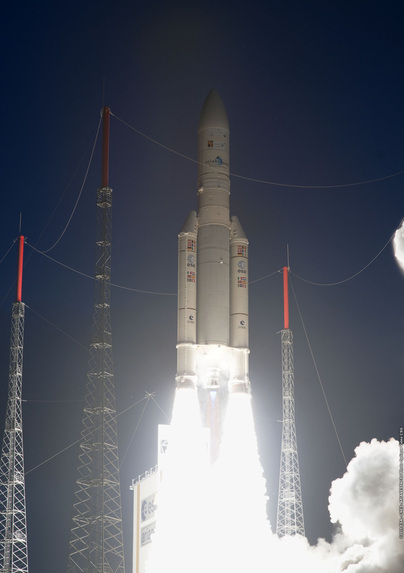
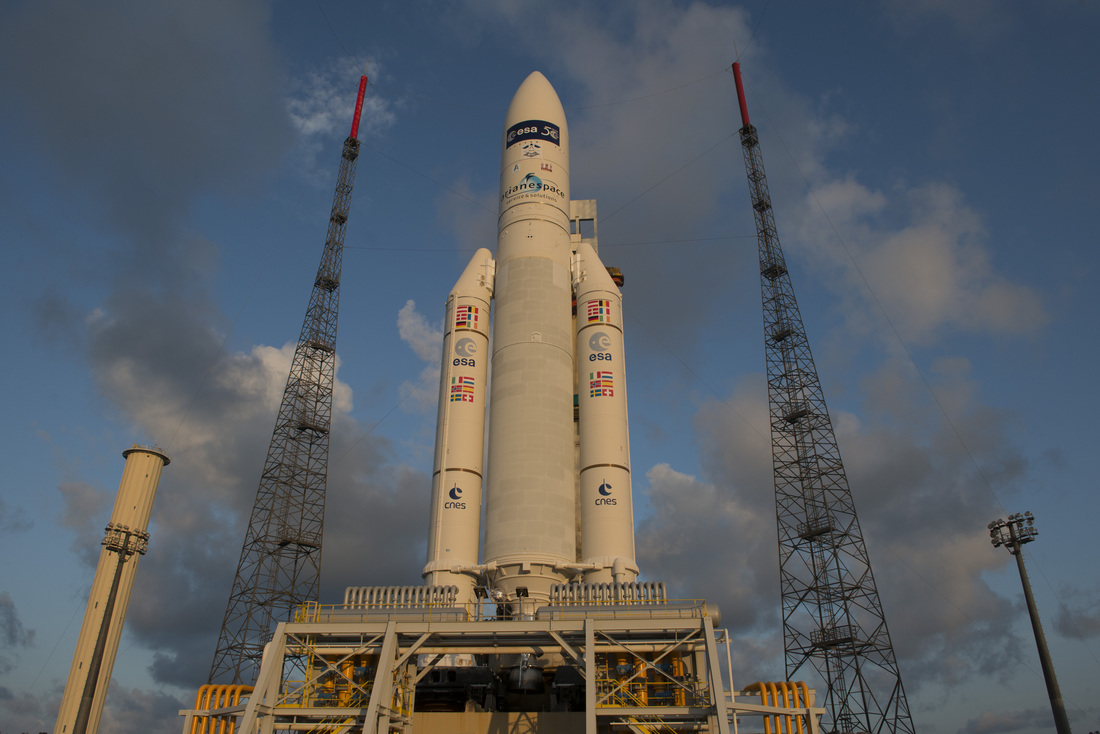
The Ariane 5 is an expendable Launch Vehicle that is being operated by Arianespace. Astrium, an EADS company, is the prime contractor for the Vehicle and is responsible for assembly of the rockets. Astrium is the leader of various sub-contractors that contribute components of the vehicle. Ariane 5 is used to deliver Payloads to Geostationary Transfer Orbit and Low Earth Orbit. The Rocket launches from the Kourou Spaceport, French Guiana. Ariane 5 rockets are manufactured under the authority of the European Space Agency and Centre National d’Études Spatiales (CNES).
Ariane 5 has logged over 75 flights since the maiden flight in 1996. With that record it has become Europe’s workhorse and will be operated at least until 2015. The Rocket is a flight proven launcher with a record of 69 successes and 2 failures. Two flights were filed as partial failures.
The Ariane 5 is the fifth rocket of the Ariane family, but has not been directly derived from previous variants. Over the course of the rockets operating lifetime, modifications were made so that different variants of the rocket are available. The Ariane 5 ES Version is equipped with all advancement improvements the ECA Vehicle has compared to previous Ariane 5 Rockets. However, the Evolution Storable Version has a Storable Propellant Stage that provides second stage re-ignition capabilities that is required to reach precise Orbits that can not be achieved with a single engine burn. The ES Launcher is only used to deliver ESA’s Automated Transfer Vehicle to Orbit and has only flown twice before.
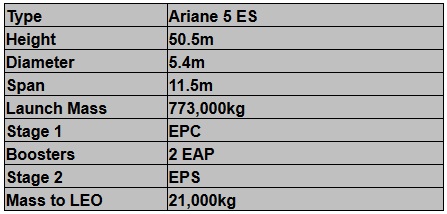
Ariane 5 ES Specifications
 .
.
Core Stage
| Type | Cryo Core EPC-E |
| Inert Mass | 14,700kg |
| Diameter | 5.4m |
| Length | 30.5m |
| Propellant | Liquid Hydrogen |
| Oxidizer | Liquid Oxygen |
| Fuel&Oxidizer Mass | 170t |
| LOX Mass/Volume | 133t/120m³ |
| LH2 Mass/Volume | 26t/390m³ |
| Guidance | From VEB |
| Propulsion | 1 Vulcain |
| Thrust at Sea Level | 960kN |
| Thrust (Vacuum) | 1,340kN (250,000lbf) |
| Engine Length | 3.00m |
| Engine Diameter | 1.76m |
| Engine Dry Weight | 1,686kg |
| Burn Time | 650 sec |
| Chamber Pressure | 117.3Bar |
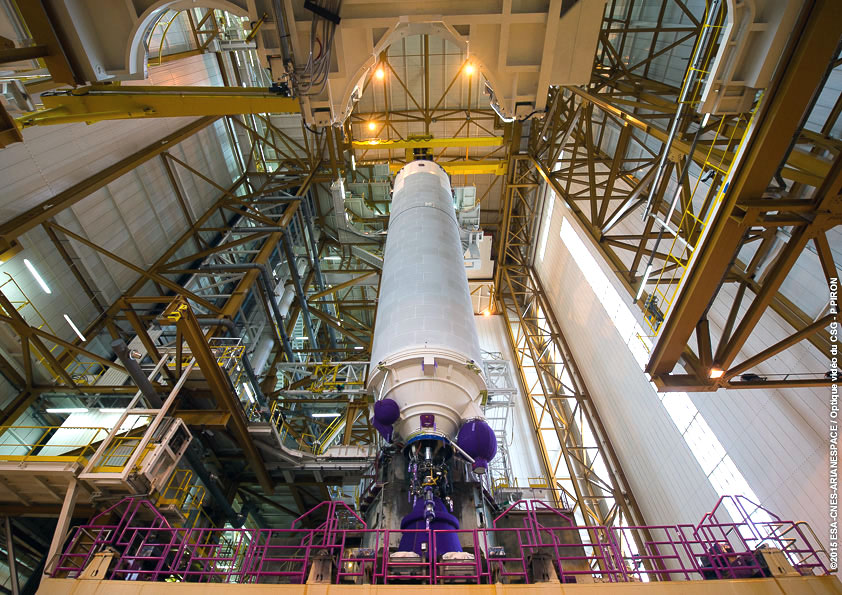
The Cryogenic H173 Main Stage of the Ariane 5 Rocket is called the EPC (Étage Principal Cryotechnique) and is fueled by Liquid Hydrogen and Liquid Oxygen. When filled with propellants, the EPC weighs about 170 tonnes.
The different tanks for LOX and LH2 are aluminum compartments that are very thin and have to be pressurized at all times to prevent them from buckling under their own weight. The LOX tank is 4.7mm and the LH2 compartment 1.3mm thick.
At the bottom of the EPC is the propulsion segment with its Vulcain Main Engine. Its development began in 1988 and it flew for the first time in 1996 on the first Ariane 5 mission which failed.
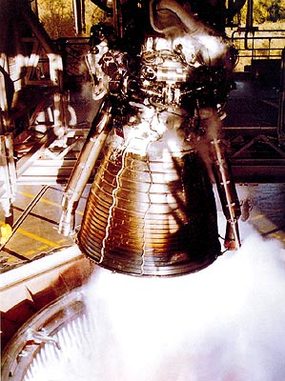
Currently, the Vulcain 2 engine is in use for the Ariane Program as it is 20% more powerful than the original Vulcain.
Vulcain is a gas-generator cycle rocket engine that provides 8% of Ariane’s thrust at liftoff – the rest being provided by the two Solid Rocket Boosters. The engine features regenerative cooling via a tube wall design and lower nozzle cooling capabilities. Turbopumps are used to feed the engine with propellants.
The LOX Pump spins at 13,600rpm with a power of 3MW, the LH2 Turbopump rotates at 34,000rpm with 12MW of power. Engine ignition is accomplished with three pyrotechnic devices on the Ground Support Equipment side of the Launch Pad.
The engine nozzle can be swivelled to control the launcher’s trajectory. Pitch and Yaw actuators move the engine to the correct position which is determined by the Flight Control System.
Solid Rocket Boosters
| # Boosters | 2 |
| Type | EAP |
| Manufacturer | EADS/LV, Europropulsion, SABCA |
| Length | 31.6m |
| Diameter | 3.05m |
| Mass | 268,000kg |
| Propellant Mass | 237,000kg |
| Fuel | Solid |
| Thrust | 6,470kn (1,450,000lbf) |
| Burn Time | 129 sec |
| Attitude Control | Steerable nozzle (7.3°) |
| Nozzle Length | 3.8m |
| Nozzle Diameter | 3.1m |
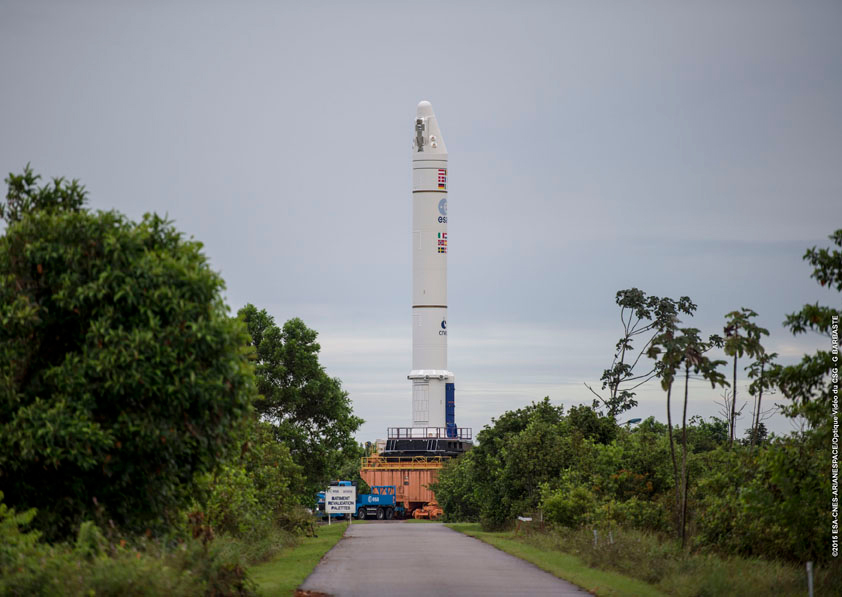
Two Solid Rocket Boosters are mounted on the Ariane 5 rocket. Those provide 92% of thrust at Blastoff. They are referred to as EAPs from the French Title Etage d’Acceleration à Poudre.
237 tonnes of propellant are included in each Booster. Steel casings enclose the individual segments that are joined together. Those casings are 8mm in thickness and can withstand a pressure of 64bar. Unlike Space Shuttle SRBs, the EAPs are not designed to fly again.
After being jettisoned 143 seconds into the mission, they fall back to Earth and are allowed to sink to the bottom of the ocean about 450km from the launch site. Occasionally, Boosters are equipped with parachutes for recovery and post-flight analyses.
Booster separation occurs at an altitude of 67km and is initiated by pyrotechnic devices and separation motors. After separation, the Boosters continue their uphill track for 100km before falling back to Earth. The solid fuel that powers the EAPs includes Ammonium Perchlorate, Aluminum Powder and Polybutadiene. Thrust from the Boosters is transferred to the Rocket’s Body via to the so called JAVE element on the Main Stage to which the EAPs are attached.
Second Stage
| Type | EPS |
| Diameter | 3.94m |
| Length | 3.35m |
| Inert Mass | 1,275kg |
| Propellant | Monomethylhydrazine |
| Oxidizer | Nitrogen Tetroxide |
| Fuel&Oxidizer Mass | 10,000kg |
| Guidance | From VEB |
| Propulsion | 1 Aestus |
| Thrust | 27.4kN (6,160lbf) |
| Engine Dry Weight | 115kg |
| Ignition | Re-Ignition Capability |
| Burn Time | Variable, Up to 1,100sec |
| Thrust Levels | Only 100% |
| Attitude control | Roll, Pitch, Yaw Control |
| Steerable nozzle (16°) |
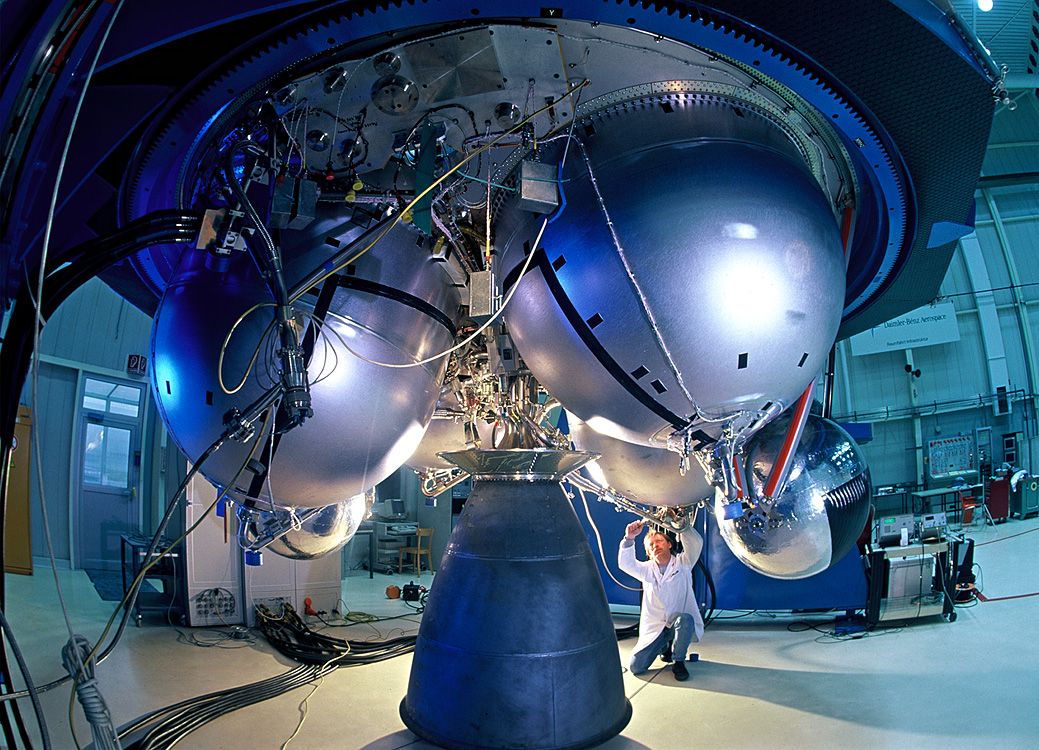
Unlike the ECA Version of the Ariane 5 Rocket, the ES variant uses a Storable Propellant Stage as its upper stage. It is called the EPS – Etage à Propergols Stockables. EPS uses storable propellants instead of cryogenics. These are loaded several days before launch into spherical tanks. A usual fueling load includes 3,200 Kilograms of Monomethylhydrazine Fuel and 6,600 Kilograms of Nitrogen Tetroxide Oxidizer. The Upper Stage is powered by a single Aestus engine that provides up to 27kN of Thrust.
Aestus features a regenerative cooling system and a radiatively cooled nozzle extension provides additional thrust. The injector element’s design utilizing coaxial injection causes mixing and atomisation of the propellants which provides improved combustion efficiency. The Engine can be re-ignited several times and burns up to 1,100 seconds during a nominal mission. Usually, two burns are needed to deliver ATV to its targeted Low Earth Orbit from where it makes maneuvers using its own engines. It is also used to perform a deorbit burn after ATV Separation to conduct a targeted re-entry for disposal of the rocket. The EPS stage for the ES Version of the Ariane 5 is using a reinforced design to support the large spacecraft.
Vehicle Equipment Bay
| Diameter | 5.4m |
| Length | 1.56m |
| Weight | 1,300kg |
| Attitude Control | Independent |
| Propellant | Hydrazine |
| Propellant Mass | 70kg |
| Design | Full Redundancy |
The VEB (Vehicle Equipment Bay) can also be called the ‘Brain’ of the launch vehicle. It houses the flight computers, electronics and avionics. Also included in the VEB are the inertial measurement units and an independent guidance system that is used to maneuver the stack after Booster Separation and especially during orbital coast phases after 2nd stage shutdown before the spacecraft are separated.
VEB located on top of the Main Cryogenic Stage and interfaces with the upper stage of the vehicle. The VEB is cylindrical in shape and can operate autonomously from launch to orbital insertion controlling all aspects of the vehicle including trajectory profiles and orientation. The inertial measurement units provide the information that the computers need to calculate the current position and required flight path to meet mission criteria. One of the key features of the VEB is the attitude control system that is comprised of Hydrazine Thrusters that are used to orient the vehicle once the ascent phase of the mission is over.
All systems of the VEB are fully redundant allowing components to fail without having an impact on mission success. Telemetry relay and communication with the ground are also features of the VEB that are important to allow ground teams to follow the mission and take necessary actions should those be required.
Speltra/Sylda
| Diameter | 4.56m |
| Length | 4.90m (Variable) |
| Mass | 425 to 535kg |
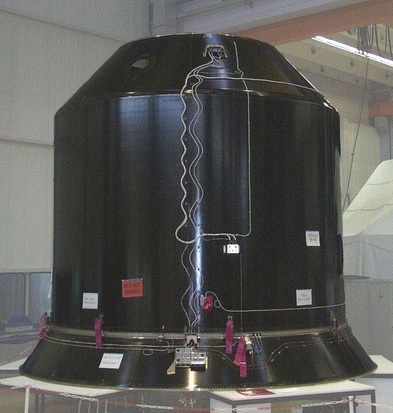
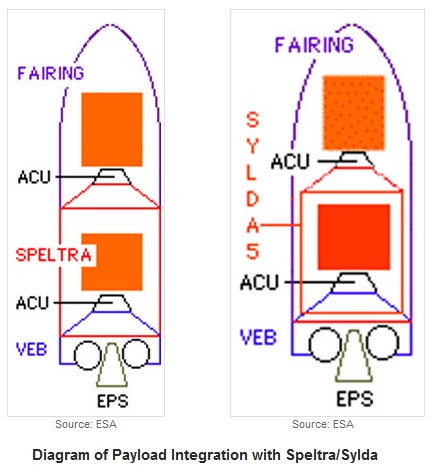 Speltra and Sylda are structures that allow dual satellite launches. Both elements are attached at the top of the upper stage and are enclosed in the Payload Fairing.
Speltra houses one satellite while the other payload is mounted on top of the structure. Two versions of the Speltra are available at a mass of 820kg and 704kg respectively. The short type is 4.1m high while the longer version is 5.6m in length. Both variants are conical at the top to allow another payload adapter to be installed on top of the Speltra which can support an upper satellite of up to 4,500kg. Speltra has a diameter of 5.4m.
The Sylda is a similar device, but smaller in size. It has a diameter of 4.5m and is 3.2m high with a one-meter cone on top of it that allows the installation of a payload adapter. Sylda 5 has a mass of 440kg. There are six types of Sylda that vary in size, diameter and weight so that a perfect fit can be achieved for each mission. During the flight, the upper satellite is separated from the Speltra/Sylda before the structure is jettisoned in preparation for the deployment of the second satellite. Separation is initiated by pyrotechnics that cut the connection to the vehicle. Springs then push the structure away, so the second satellite is revealed for its deployment.
Payload Fairing
| Diameter | 5.4m |
| Length | 17.0m |
| Mass | 2,500kg (5,512lb) |
| Separation | Pyrotechnic Activation (Actuators) |
| Construction | Sandwich Construction |
| Graphite Epoxy Face Sheets | |
| Aluminum Core |
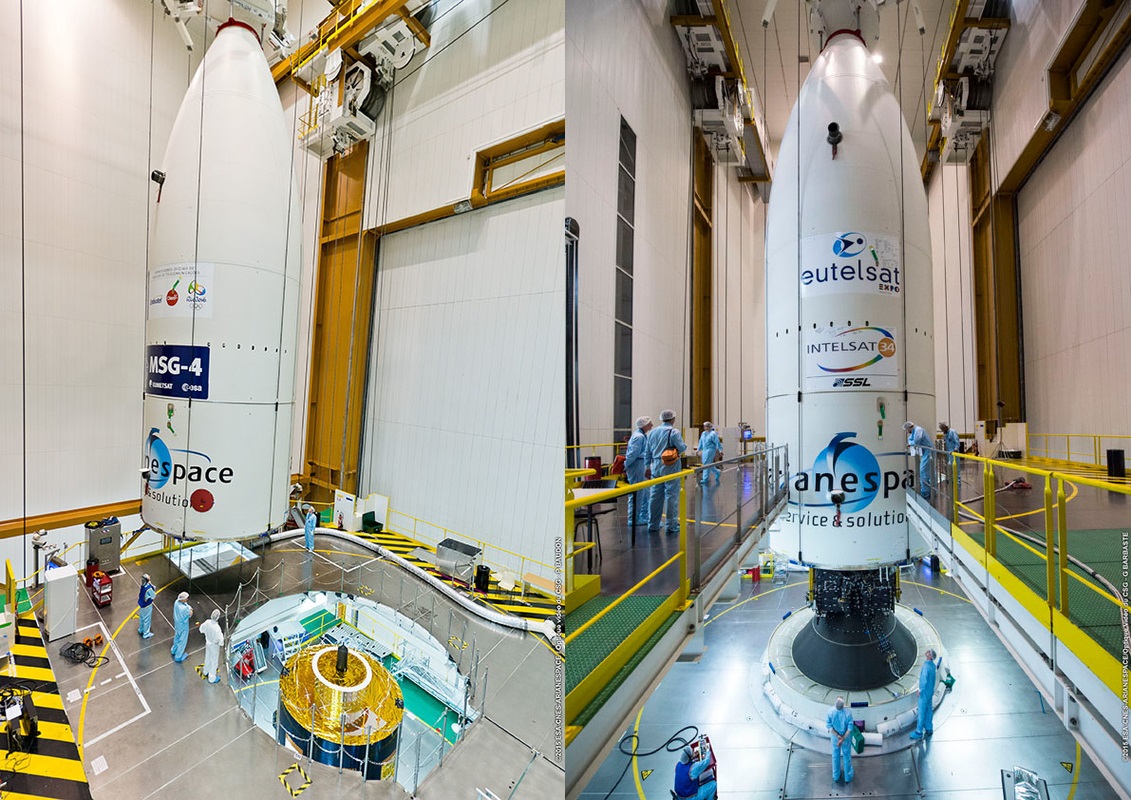
The Payload Fairing is positioned on top of the stacked vehicle and its integrated payloads. It protects satellites or other spacecraft against aerodynamic, thermal and acoustic environments that the vehicle experiences during atmospheric flight.
When the launcher has left the atmosphere, the fairing is jettisoned by pyrotechnically initiated systems. One system splits the fairing vertically, the other frees the two halves. The fairing then falls back to Earth and burns up in the atmosphere. Separating the fairing as early as possible increases ascent performance.
Ariane 5 can be equipped with two different fairing designs. Both are cylindrical in shape, but their overall length and weight varies. Both types of fairing have an inner diameter of 4.57m. The shorter version is 12.7m in length while the large fairing is 17m long. For dual satellite launches, the larger Payload Fairing is being installed on the Vehicle.
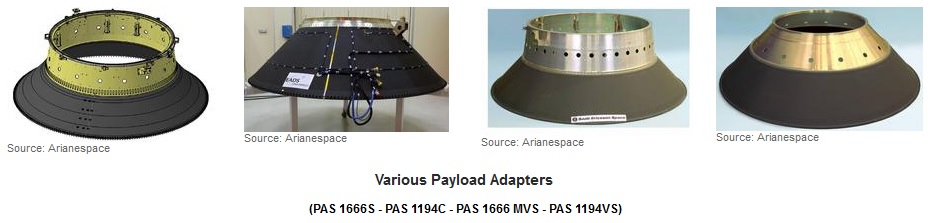
Payload Adapters
Payload Adapters interface with the vehicle and the payload and are the only attachment point of the payload on the Launcher. They house equipment that is needed for Spacecraft Separation and ensure that the satellite or spacecraft is secured during powered flight. A variety of payload adapters is available to satellite customers in order to fit a large number of spacecraft dimensions and interfaces. 9 different adapter models are currently available. Most of those have a clamp band payload separation mechanism.